Introduction
Wagner’s use of music to guide the viewer’s attention and interpretation of narration was regarded as a useful technique by the Hollywood Cinema world. “Just as Wagner fitted his music to the emotions, expressed by words in his operas, so over time, no doubt, the same thing will be done to the moving picture”, as a music paper stated in an article around 1910. (Gilman, 2010) The specific use of the so-called leitmotifs in both Wagner’s opera as well as Hollywood Blockbusters shall be discussed in this paper. We will see, how using a leitmotif can enhance a story. We will see how Richard Wagner used the leitmotif in its original form and how contemporary film composers use this device to tell stories.
Film music in general
Richard Wagner described in his letter on January 1st, 1860 addressed to Wesendonk that he regards himself as an eye-minded human being, yet visuals alone do not quite satisfy him as a single sense. (Schneider, 2004) He was talking about the opera (a screenplay accommodated by music), though this seems quite true for today’s film as well. Music is used in film to elevate the story. Contrary to Classical music in general, It mostly functions in the background. Good film scoring is characterised by the fact that it works without taking away attention from the film itself. Upon underscoring and counterpoint, a widely used technique is the use of the leitmotif.
Leitmotif technique
A leitmotif is a short, but clearly defined musical idea, which is associated with a certain character, scenery, or circumstance. A certain leitmotif is present typically always when the associated figure appears on screen or within the script. Even though this concept is deeply rooted in Richard Wagner’s work, he never used this term. He used this concept to tell the story musically in his operas. As the signified may develop during the film or series, the leitmotif usually develops accordingly to adapt to the current situation. We further discuss how using a leitmotif can tell a story by itself using famous examples.
Wagner’s Opera “Ring des Nibelungen”
“Ring des Nibelungen” is the most complex symphonic opera (first of its kind) written by Richard Wagner over the course of about 26 years combining Norse mythology with the Nibelungenlied. The Ring opera are constituted in four different sequences: Das Rheingold (Rhinegold), Die Walküre (Valkyrie), Siegfried, Götterdämmerung (Twilight of the gods), which are often performed separately due to their length. As a significant element of this opera, Wagner adopted the use of leitmotifs, as he described them as guidelines to feeling (Bribitzer-Stull, 2017). Many of the motifs of The Ring are related to one another as they are representing similar themes, related characters, or moods that can be connected through the choice of key, rhythm, and harmony. One of the most prominent motifs used is the Ring motif.

For example, transitioning between scenes 1 and 2 of Das Rheingold, the ring motif is played several times in different harmonic contexts, finally resulting seamlessly in the Valhalla motif. It is an eerie motif, which proves to be adaptable to a wide range of moods, produced by the slightest change in harmony and rhythm. This is a technique Wagner often used to create a sense of foreboding, which occurs when a motif is being presented before its dramatic meaning is clear. The return of it transforms it into a motif.

The first time we hear this motif is together with the declaration of the ring’s power being sung in the lyrics. It is being presented in different keys, different orchestration, sometimes in its entire length, and sometimes just fragmented hints - a technique which will be adopted by film composers.
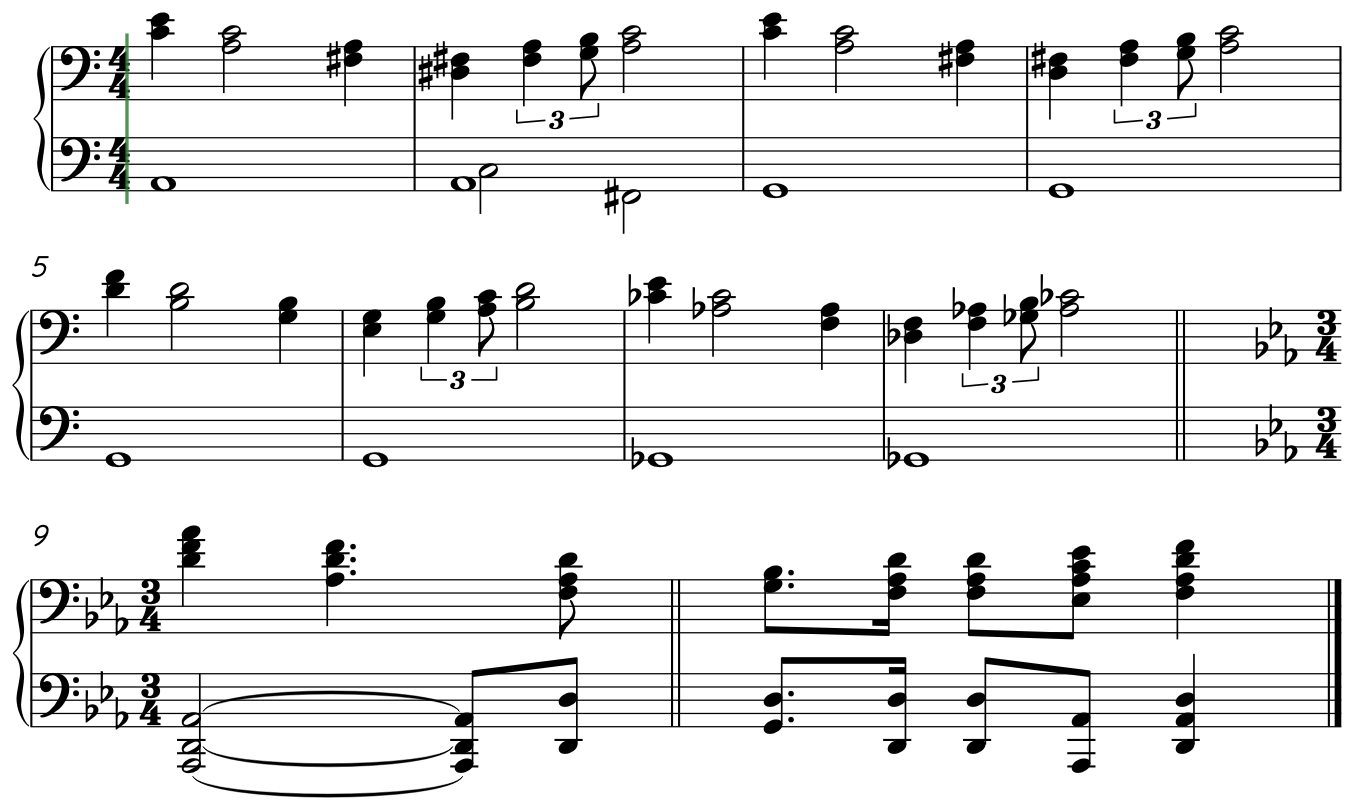
An example occurs shortly after we hear it for the first time, while Wellgunde explains to her sister Flosshild who is meant to forge the gold: here the violas and violins play only the first half of the motif. This technique also occurs in scene 2, when we hear hints of the Valhalla motif several moments into the score. For a motif to work well, it has to be depicted with its signified by the audience. Leitmotifs themselves do not inherit any association. This relationship between the signifier and signified is being constructed by Wagner. E.g. the link between the Valkyrie motif and the Valkyrie themselves is not instinctively understood, but Wagner creates this connection by playing the motif whenever the Valkyrie appear or are discussed. (Bribitzer-Stull, 2017).
Leitmotif in film
In the 1940’s the idea of linking musical ideas with concepts started to become popular among film composers. Using the example of Star Wars, we discuss how a motif works in its structure, whereas the development and context of a motif according to the story are being discussed using Lord of the Rings as an example.
Star Wars
It is said that Williams’s music on Star Wars (especially Episode IV) comes as close as film music to the tone of Wagner. (Power, 2018). This is due to the symphonic tonal score and the use of dozens of leitmotifs. Star Wars is a science fiction saga containing many different elements of film genres. The story can be broken down into the fight between both forces, the good (Luke Skywalker/Jedi) and the evil (Darth Vader/Empire). The fight between good and evil is also mirrored in the musical structure: Luke’s theme, which is also the force theme, contrasts the Darth Vader theme, symbolising the evil side of the force.
The Force theme aka Luke’s Theme
Even if the force theme is present in every Star Wars movie, its most prominent appearance is in Episode IV in the cue “Binary Sunset”, where Luke Skywalker contemplates his future while watching a pair of suns set on the horizon of Tatooine.

It combines both a gentle poignancy and brash militarism. To explain this, let’s take a look at its melody first: it consists of four two-bar ideas. The accentuated notes form a rise to its climax through the first three ideas, followed by a fall in the last. This pattern of a long gradual built to a climax followed by a rather short relaxation can be found in many action narrative themes (especially superhero themes) (Richards, 2013). Also, this theme seems to be wanting to keep its upward motion, but is thwarted from doing so. Only in the third idea, we get that rise to the octave, giving a feel of a climax, intensified by full orchestration. This is why the theme feels right as a symbol for the Rebel’s struggle in general. Its rhythm is also very distinctive: written in a 4/4 meter, the first and third beats are almost always accentuated and it contains many triplet and conspicuous dotted (long-short) rhythms.

These elements are typical for a march. With this given, even in its gentlest version, this theme has a marching military feeling, making it appropriate for representing the Jedi and Rebellion. Within the harmony, its major chords IV and VI give it a feeling of hope and heroism within a larger climate of a minor key.
Imperial March aka Darth Vader’s Theme
This theme actually can be divided into two complementing parts: the accompaniment and the melody itself.
The accompaniment. The most prominent feature of the accompaniment is its rhythm: written in a 4/4 meter, it’s written in such a way that it accelerates through the 4 beats of the bar. With the triplets creating a military rhythm and the emphasis on strong beats, the effect of this musical idea is a “forward drive suggesting a powerful and aggressive force that doesn’t let up until it gets what it wants” (Richards, 2013).
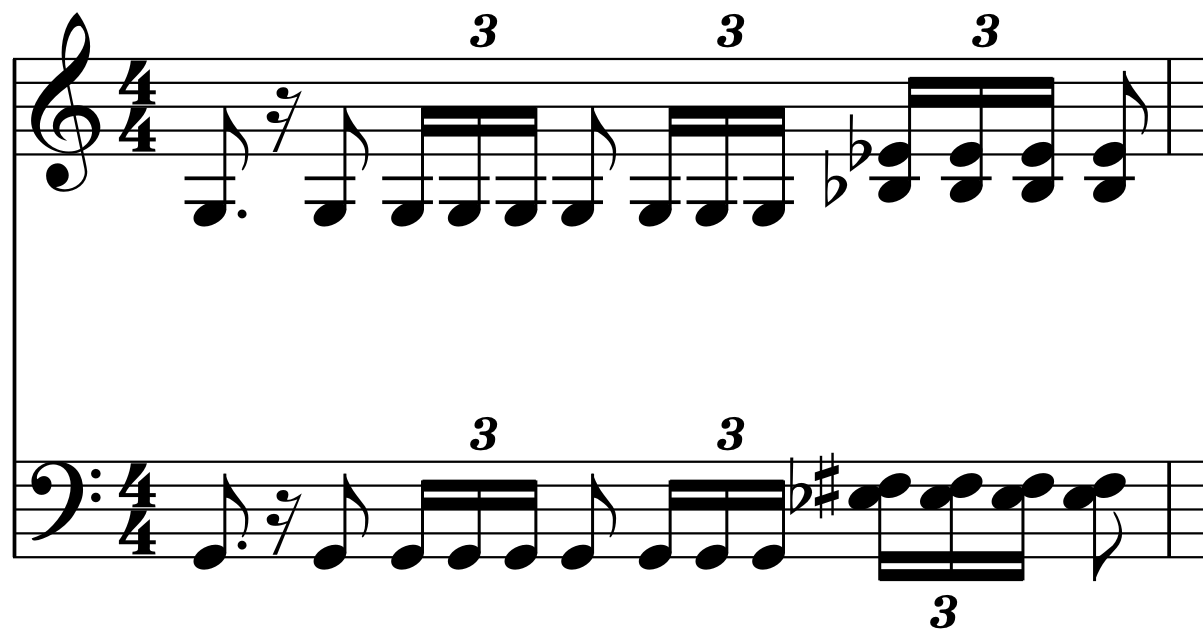
A huge part of making this theme sound evil, lies in the orchestration: the timpani, strings, and horns are at or near their bottom register, creating a very dark colour of sound. For the most part, as we just hear a G, there is no clue of harmony. Except in the last measure, where we hear Eb-Gb-Bb, which confirms a G minor key, making the feel even darker. To take it up a notch, Williams uses a minor version of the chord, which usually would be a major in the key of G minor. The 2nd and 3rd time repeating this rhythm (before the melody even enters), Williams adds the note A to the last measure, creating a “biting” dissonance between the A and the Bb. Thus, even before we hear the melody, much of the character of the march has already been established by this riff. (Audissino, 2014)
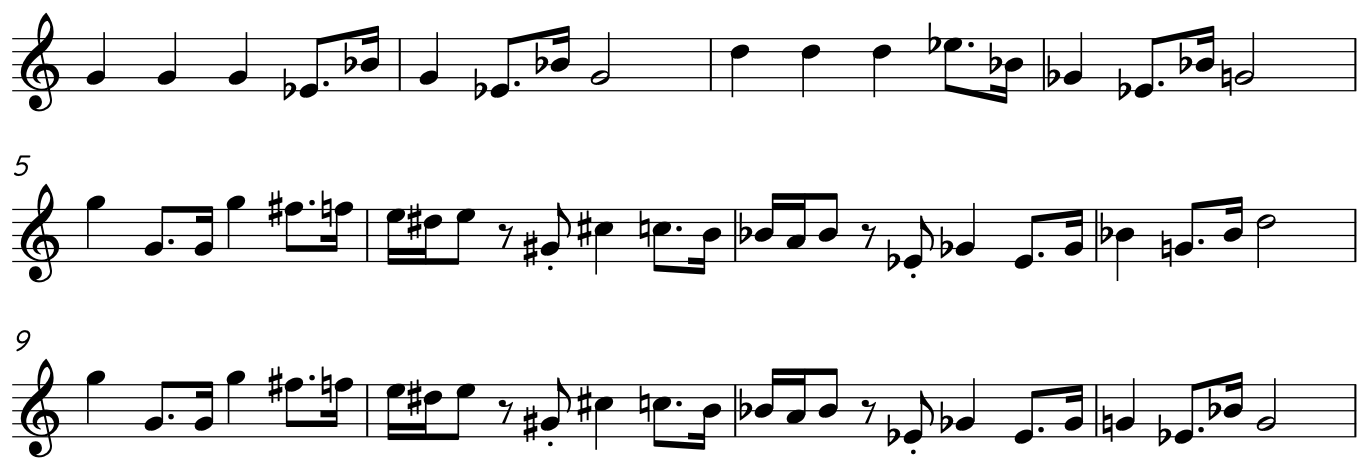
The melody. The melody enhances the military feel of the march by emphasising the strong beats and use of dotted rhythms. The use of brass instruments (trombones and trumpets in their low-mid register) gives the sense of considerable military might, in contrast to the force theme, where the trumpets only come it in its climax using the higher register timbre to suggest heroism.
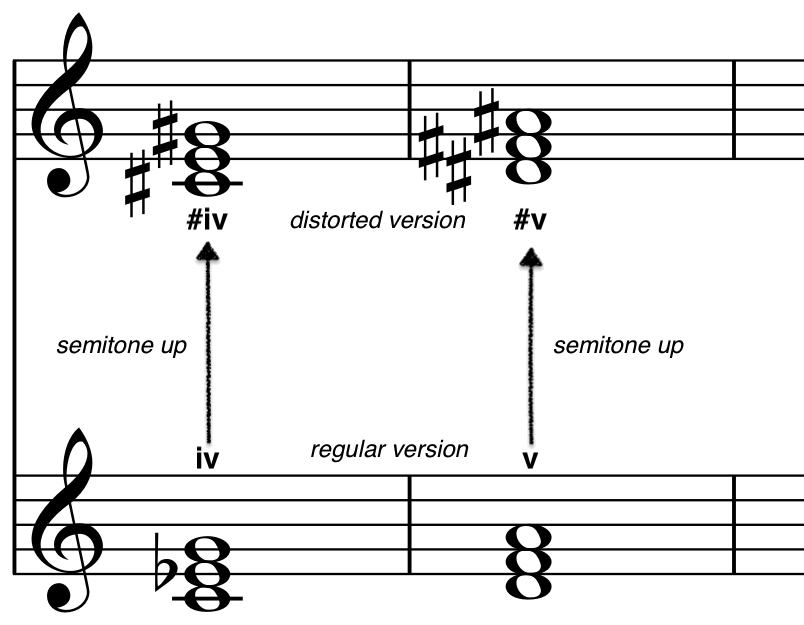
The harmony also contributes to the dark colour by only using minor chords. The chord progression in the opening riff is also not an average one: in the second half of the melody, you can hear the I-#iv-#v-i chord progression in G minor. This progression is distorted since the fourth and fifth scale degree are raised by a semitone, giving an impression of the darkly abnormal evil worldview.
Melodically, the theme is overall moving in a downward direction, suggesting the heavy hand of the Empire is bearing down on the Rebels as us. This is also true considering the first time we hear this theme fully developed is when we see a huge Imperial Star Destroyer passing overhead. (Audissino, 2014)
Lord of the Rings
Lord of the Rings is often compared to Wagner’s Parsifal concerning the story. Musically speaking though, Shore’s score is closer to Wagner’s Ring opera. In Shore’s score it’s not the single characters that get to have motifs, but rather each culture has its motif. Each of the principal cultures in Tolkien’s story is characterised by its musical style: the Hobbits are presented in a Celtic tone, Isengard’s escalating industrialism is represented by the sound of metal, low brass, and hammered percussion, ancient elves are equated with chromatic harmonies and Eastern tones, middle-earth’s men are set to ruminative minor-mode melodies, etc. (Adams, 2011). Even though each of the over 90 themes has its permanent musical colour, they are changing constantly melodically and rhythmically to fuse the themes to the development of their dramatic meaning. In further regard, we take a closer look at the Ring Motif and the Shire/Hobbit Motif, as both are the most prominent and most associated with the Lord of the Rings Saga.
Ring Motif
The Ring Theme has a mysterious seminal quality, giving it a “breathing effect” - inhaling and exhaling - as if the Ring was alive, as Shore intended. The mysterious effect is enhanced by instrumentation: it is played in a minor key in the high register of a violin.
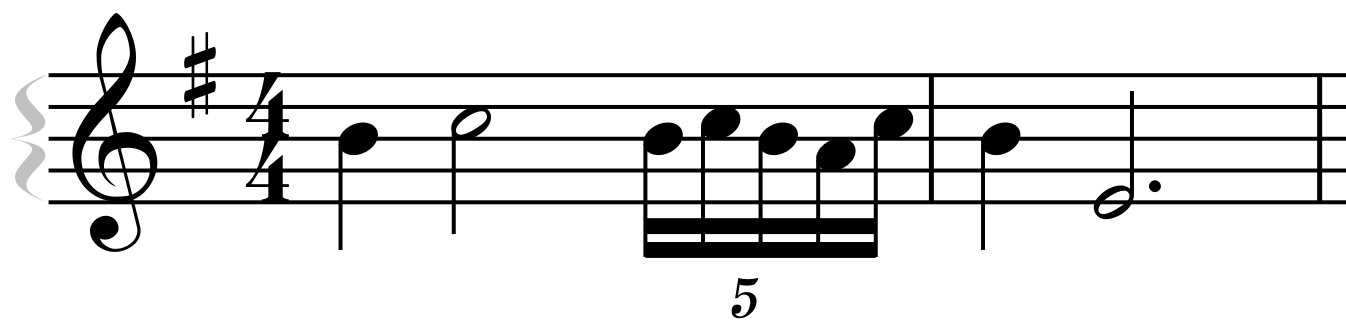
Apart from that, if you compare Sauron’s theme with the Ring’s theme, you’d find that those are similar. They were designed to be this similar by Shore, because as Gandalf says in the movie: “They are one!”. In the Fellowship the ring itself is more or less in an inactive state. Thus, the ring’s theme recurs in similar orchestrations, keys, and styles. In The Two Towers (second movie), however, the ring theme changes slightly in becoming more weighted in orchestration at parts. (Adams, 2011).
Shire/Hobbit Motif
The Shire theme is generally connected with the comfort of the Shire, home, and sometimes with the playfulness of the Hobbits. It is often played on a fiddle or a pan flute, which gives the music a countryside feel.
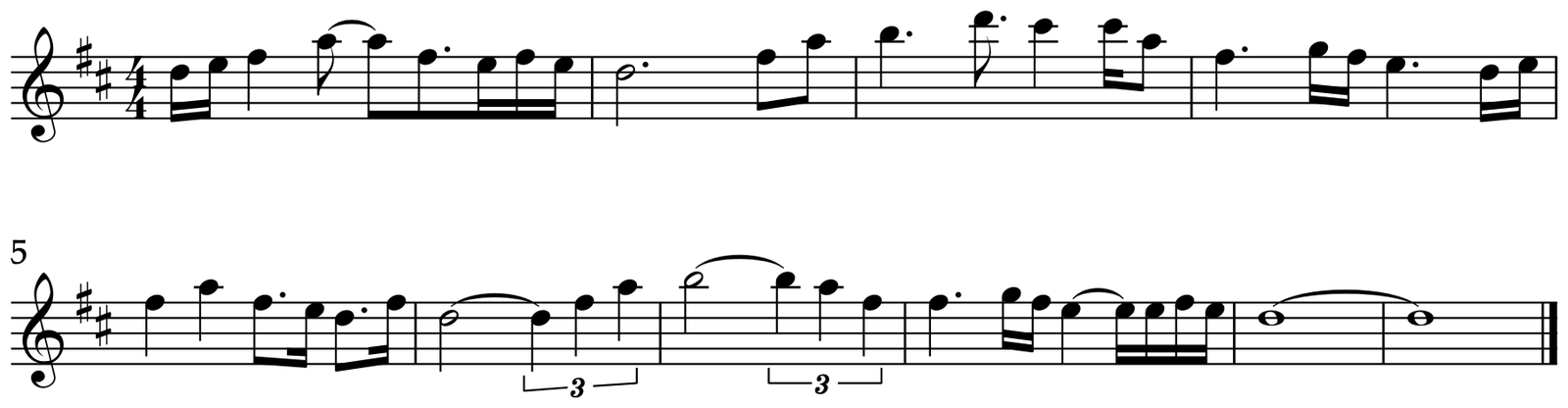
Hearing the Shire theme, symbolising the joy and beauty of their home, when the Hobbits are on their journey to save their home, their individual mental and emotional journey becomes much more relatable. Also, similarities between the Shire music and Celtic music are found through instrumentation of the themes and the ornamentation of the melody line. (Adams. 2011)
Fellowship Theme
This theme may be accounted as the Lord of the Ring’s movie theme. Before it comes up in its full glory, Shore builds it up in a few variations. The first time we hear this theme is when Frodo and Sam leave the Shire on the road to Rivendell to start their adventure. Shore takes a snippet of the Shire theme and then transitions into a humble statement of the Fellowship theme with just French horn and Cor Anglais. This is almost immediately contrasted with a darker variation when Gandalf rides into Isengard to take council with Saruman. Shore adds crashing Cymbals and plays it off Gandalf’s galloping horse. This tense variation prefigures Saruman’s eventual betrayal.
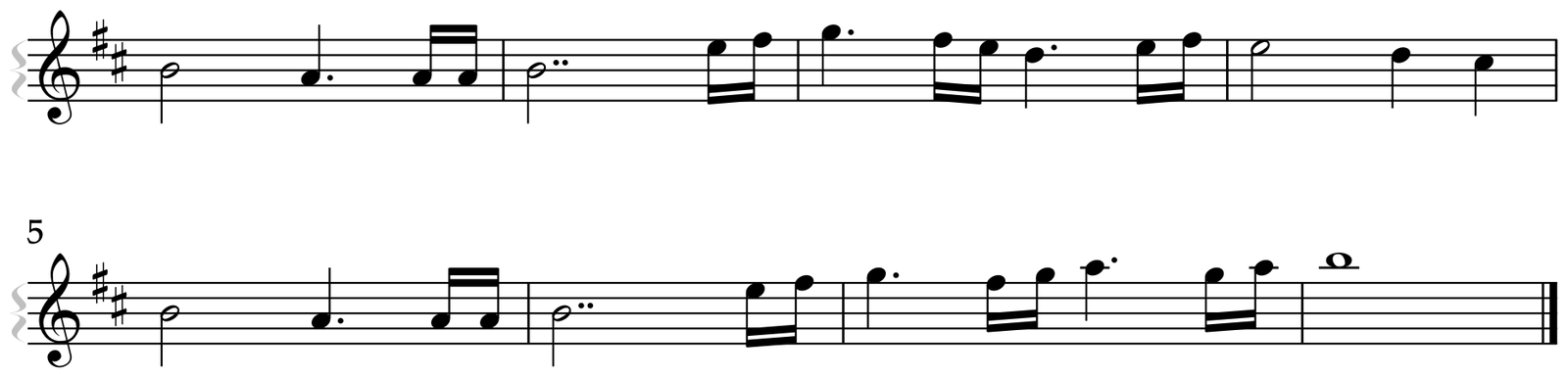
The two variations playing off each other anticipate the eventual fracturing of the fellowship later in the film. The next time we hear the theme, the fellowship has grown: Frodo and Sam have accepted Aragorn as their temporary leader. And so does the theme: the brass section has grown to three Horns and the stately melody of this theme is upset with the timpani drumbeat adding urgency. It does not appear again until after Frodo has been stabbed by a Ringwraith. As Arwen takes him back to Rivendell, the fellowship theme mixes with a Wraith theme threatening to overtake it: The fellowship might dissolve before it even had a chance to fully form.
At the middle of the film, the fellowship finally comes together and Shore echoes that by presenting a string of three Fellowship statements in their full orchestration and glory: First, when the Fellowship is announced; third, when the fellowship strides heroically away on their quest. The second, though, is the most interesting: just as the fellowship is about to depart, Shore slightly teases the Shire Theme before it is overpowered by the Fellowship theme, suggesting that the Hobbit’s priorities have shifted and they now have to live with the consequences of that. Further, it ends with a unique harmony on the second half of the full statement as if to sow a seed of doubt right into the middle of the team as it comes together.
In the Mines of Moria, where we last see the Fellowship in action together, the theme appears at last. But the ¾ time signature gets overtaken by the 5/4 time of the orcs theme, and after Gandalf’s loss, the fellowship theme only returns in fragments until the very end of the trilogy (Adams, 2011). For example, both moments, the death of Boromir and the leaving of Frodo and Sam, are linked with a severely deflated, but a poignant rendition of the leitmotif, that fades into silence. Just like the Fellowship itself, the theme builds to its full formation and then is deconstructed until it’s only a shell of its former self. Shore does this with instrumentation, tempo, and harmony. He does this with several themes in the trilogy, weaving them back and forth and through one another so that the result is a complex web that entwines with the story. (Adams, 2011)
Conclusion
Comparing both movies (Lord of the Rings and Star Wars) with Wagner’s Opera “Ring des Nibelungen”, it can be seen that both composers (Shore and Williams) made use of the leitmotif in a similar way to Wagner. Both movies are known for their extremely long soundtrack - covering nearly the entire film -, which, just as in Wagner’s work, allowed them to be enormously creative, unfolding the motifs when repeating them. Both sagas being highly successful indicates the effectiveness of the leitmotif technique. Furthermore, the majority of people unaware of this technique, further states its success over the years, since the reappearance of motifs does not distract from the film, but unconsciously guides our understanding of the narrative. Apart from the signifying role of the leitmotif, by changing its instrumentation, key, or harmony and using these variations over time, the composer can tell a story with just the music itself. In film, especially when the audience might not identify with the characters or the setting, due to time settings or other factors, the leitmotif technique is a very powerful tool that can enrich a film (or an opera) by its contribution.
Bibliography
- Adams, D., Shore, H. (2010) The music of the Lord of the Rings films: a comprehensive account of Howard Shore’s scores. Van Nuys, CA: Alfred Music.
- Audissino, E. (2014) John Williams’s film music: Jaws, Star Wars, Raiders of the Lost Ark, and the return of the classical Hollywood music style. Madison: University of Wisconsin Press. (Wisconsin film studies)
- Bribitzer-Stull, M. (2015) Understanding the leitmotif: from Wagner to Hollywood film music. Cambridge: Cambridge University Press.
- Jackson, P. (2001) Lord of the Rings - The Fellowship of the Ring.
- Jackson, P. (2002) Lord of the Rings - The Two Towers.
- Jackson, P. (2003) Lord of the Rings - The Return of the King.
- Joe, Jeongwon; Gilman, Sander L. (eds.) (2010) Wagner & cinema. Bloomington: Indiana University Press.
- Lucas, G. (1978) Star Wars Episode IV - A New Hope.
- Opera North (n.d.) Act I: Die Walküre | The Ring Cycle.
- Opera North (n.d.) Act II: Die Walküre | The Ring Cycle.
- Opera North (n.d.) Act III: Die Walküre | The Ring Cycle.
- Opera North (2016) Das Rheingold | The Ring Cycle.
- OxfordUnion (n.d.) Howard Shore | Full Q&A | Oxford Union.
- Power, C. (2018) ‘Williams and Wagner: The Leitmotif from Valhalla to a Galaxy Far, Far Away | Conor Power - Academia.edu’ [online] (Accessed 28.06.2021)
- Reitter, A.J. (n.d.) ‘Hollywood’s Transformation of the Leitmotiv’ In: p. 85
- Richards, M. (2013) ‘John Williams Themes, Part 3 of 6: The Imperial March (Darth Vader’s Theme) – Film Music Notes’
- Schneider, T. (2005) Das literarische Porträt: Quellen, Vorbilder und Modelle in Thomas Manns Doktor Faustus. Berlin: Frank & Timme. (Literaturwissenschaft)