As a guitarist, you might agree that tone lies in the fingers, not the gear. This is true to a certain point. Most of the tone is actually in the playing style, but the gear used (mostly creatively) plays a huge part as well. In this article, I will focus on the gear and creative aspects of achieving these sounds. My goal is to give you a better understanding of how to get a certain tone and, thus, inspire you to find your kind. First, I will discuss each aspect affecting the sound, leading into a short description of what to consider creating certain sounds associated with different styles. In the end, I will give some inspiration to how famous guitarists used their gear creatively.
Guitar
The first piece of gear affecting your tone is your guitar. Many aspects are influencing its sound - shape, wood, strings, pickups, just to name a few. If you compare alder and basswood as body wood, you will find that the alder retains a lot more highs and lows than the basswood does, which leads to the perception of a little less mids. Two other very common body woods are mahogany and maple, which couldn’t differ more in sound. Whereas mahogany emphasises a lot more low end (meaning it adds a warmer feel), maple sounds a lot brighter and induces a certain “bite” to the tone. Similar to mahogany, but a lot more precious, is rosewood. For the fingerboard, the most common woods used are rosewood, maple and ebony. The last two have a similar effect to the tone: both sound bright due to the production of higher overtones and filtering out lower bass favoured harmonics. However, rosewood as the choice of fingerboard wood will give you a warmer tone - since the high end feels dampened - and great clarity and articulation in tone. The most common neck woods are maple, rosewood and mahogany. Their effect as a neck wood resembles their effect as a body wood.
When it comes down to pickups, you will find the two most common ones are single-coil pickups and the so-called humbuckers. The single-coil pickup has one coil of wire wrapped around its poles in the pickup. This type of pickup may produce a lot of hum due to electromagnetic interferences from nearby objects. To cancel out the hum, two single-coil pickups wired in the opposite direction are connected, resulting in what is called a humbucker. You can also cancel out the hum by switching to two nearby single-coil pickups simultaneously, but it would not be as effective as using a humbucker. In heavy styles like rock or metal, humbuckers are preferred as they sound sharper and smoother than their companion. Also, its position plays a huge role: a pickup in the neck position sounds warmer than the same type in the bridge position, which will sound more punchy and brighter. For example, in a rhythm part, a singlecoil pickup in the neck position may sound muddy and weak. So a switch to a bridge humbucker might be a better choice.
The strength of the strings also affects even so slightly - the overall tone. Thicker strings have more sustain and the notes sound thicker compared to a lighter gauge. Also, there is a big difference between old and new strings: strings tend to lose attack and bite over time. Certain situations may call for old strings, others for new strings.
Amp
With the variety of amps available nowadays, it can be overwhelming trying to dial in the tone you’re after. The amp consists of two major sections: the power and the speaker section. A combo amp is a unit of both, and thus, more portable and suitable for gigs. The speaker itself affects the tone as normal Hi-Fi speakers do: smaller sized speakers have a better high-end response, but poor low end and vice versa. 12” sized speakers seem to be a sweet spot as larger speakers tend to sound muddy and flabby quickly. Also, the bass response will be better, if you have a closed-back cabinet and vice versa. The combination of head and speaker has a major influence on the tone. For example, if you compare a 2x12” cabinet with a 4x12” - just adding two speakers -, you will get a much wider and bigger sound.
Amp models can be categorised into two major amps: tube and solid-state amps. They are characterised by the way they shape the tone - tube (or valve amps) use tubes to alter the sound, whereas solidstate amps use transistors. When driven into clipping, tubes generate even-ordered harmonics, which tend to sound warm and full. Transistors, however, the distortion starts more immediately and its emphasis is on odd-ordered harmonics, resulting in a more metallic sound. Depending on the genre, a certain type of amp is being favoured by guitarists. Rock - or any variation of it - rely on tube characteristics, whereas e.g. for smooth jazz a transistor would be more suited. This is because tube amps tend to colour the tone heavily, whereas transistors keep it transparent.
Gain effects
Overdrive
When guitarists first started experimenting with overdrive in the 60s, they cranked their tube amps until they went into overdrive. What you then hear is the signal breaking up. Since people in the early days blew up a lot of amps, overdrive pedals exist. The pedals work in the same way. They push the guitar’s signal, so it pushes enough to the limit of the amp to produce the overdrive. When compared to the other type of distortion, overdrive can be thought of as the smoothest type of gain sound. A major difference between those is the fact that with overdrive, turning down the volume knob on the guitar will give you a cleaner tone, whereas, with distortion or fuzz, it will result in a dirty tone at any volume. So as a result overdrive gives you a wider dynamic range.
Distortion
Whereas overdrive is produced in the amp and not in the pedal, distortion is different. Distortion is completely produced in the pedal - or distortion circuit inside the amp - by breaking the signal on its own and feeding that to the amp. With distortion units, guitarists can dial in the perfect amount of distortion without the possibility of blowing up their amps. Whereas overdrive uses soft-clipping, distortion squashes the signal’s transients harder until they’re flat (called hard-clipping). On other instruments, hardclipping can sound horrible, however, on the guitar, it can sound great.
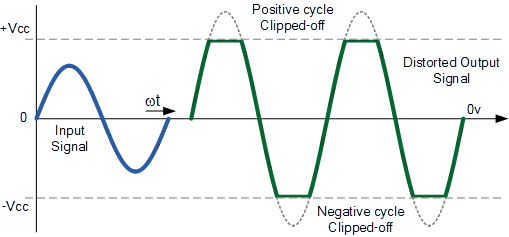
Compared to overdrive, it produces a more consistent tone in volume and gain. This makes it great for styles like Rock or Metal - it gives the rhythm parts more consistency than overdrive does.
Fuzz
While overdrive and distortion give you a similar kind of saturation, fuzz takes it to the next level into a completely unnatural territory and provides a more aggressive style of compressed distortion. It distorts the initial sine wave into a square wave, which can make your amp sound broken. The type of transistor used inside the fuzz plays a major role in the sound it creates. Germanium and Silicon are the two most used transistors in the industry. Both differ in sound from each other and to make it worse, transistors are inconsistent. One Germanium transistor can sound amazing, while another can sound terrible. Apart from that, fuzz can offer excellent dynamics and retain clarity at low gain levels - where it feels similar to overdrive with the addition of some distinctive grit.
Dynamic effects
Compressor
It mostly goes unnoticed, if a compressor is being used as an effect in your rig, but it can have a great impact on your tone. Unlike the previously discussed effects, compression reduces the dynamic range without distorting the signal (if properly used). In some situations it may improve your tone, in others, it will worsen it. Using it on a clean tone will provide more clarity, warmth, and sustain. Even in low gain situations, it may bring out more clarity in each tone resulting in each note feeling stronger. Thus, for example, a rhythm part would feel tighter with some compression applied. Compression on a high gain tone is a great way to achieve more sustain and a smoother lead tone. In any live or recording situation, a compressor will help the guitar cut through the mix better.
Booster
A booster’s goal is to increase the volume, without affecting the signal’s gain. Thus, it may sound similar to an overdrive effect. A reason to use a boost pedal is that you can turn it on and off at any given time, helping your lead solo’s cut through a mix better for instance. Also, when using vintage gear, one may come in handy, since vintage gear sometimes struggles to keep the volume up. Playing lead guitar, a booster may help you stand out since you’re mostly playing singular notes, compared to the rhythm guitar.
Noise gates
Noise gates are a necessity when playing with high gain. By boosting the gain and/or using singlecoil pickups, you will experience an annoying hum that will ruin your tone. The gate works in an opposite way than the compressor does: it takes the softest part and drops the volume even lower, so you can’t hear it anymore. This results in eliminating the hum, while you are not playing. A variation of the gate is the suppressor. However, whereas a gate cuts the signal once it falls below a certain threshold, the suppressor is constantly active filtering out certain frequencies.
Time-based effects
Delay
The simplest way of thinking about a delay is that the signal is split into two of which one gets delayed by a certain amount of time. Though, there is a difference between analog and digital delay. By difference, do not assume difference in quality. Analog delay - for example tape delay - degrades the delayed signal over time. This may seem like a bad thing, but oftentimes this is presumed to be a blessing. With degrading delays, the original tone stands out a lot better. Analog delays, though, are limited in certain aspects compared to the digital delays, such as the delay time they can provide. A short delay time can be used to achieve an interesting rhythmic effect with a slight touch of a shimmery effect. This also can be adjusted by the feedback, which determines how often the original signal gets fed into the delay. Some delay pedals even give you the option to mix in some modulation effects, which we will focus on later. For example, a simple arpeggio riff can be turned into something really interesting using an analog delay with some modulation.
Digital delays work similarly but include a couple more processes, such as the A/D and D/A conversion. In the early days, digital delays seemed to be inferior to analog delays and sounded sterile and cold. Digital delays do not degrade over time as the analog delay does naturally. However, it can be programmed to degrade in very different ways. Compared to an analog delay, a digital delay offers more flexibility. For example, you can create a ping-pong delay - a stereo delay with different delay times on each side - or reversed delays, which can produce an interesting psychedelic sound.
Reverb
There are different kinds of reverbs: spring, plate, room, chamber, and hall. Room, chamber, and hall sound similar, as they mimic different types of natural reverb you would hear in a certain environmental space. Spring and plate reverb are named after the way it’s been created. Unlike the other kinds of reverb, the spring reverb has a more shimmering and metallic feel. That’s why it used to be popular in guitar amps (especially around the 60s). The plate reverb, however, has a more natural sound, and a smoother tone without the shimmering. Room, hall, and chamber reverb only differ in the modulated room size, which alters the overall tone - e.g. chamber reverbs can sound shimmery and metallic as the spring reverb. Sometimes, adding even a slight amount of reverb can change the feel and tone of a guitar completely.
Modulation effects
Phaser
As the delay, the phaser (or phase shifters) splits the signal into two. One copy is left untouched - the dry signal and the other is being passed through filters that create an out of phase signal. And the end of the chain, both signals are being mixed, thus, creating the phaser effect. The pedals differ in the amount of different phase-shifting stages they offer. The more stages are active, the more pronounced the effect will be. The sound it creates is similar to an EQ sweeping up and down, which creates a sense of movement. If you change the rate to a higher value, the sweeping turns into a pulse, which can be used rhythmically. Sometimes, when a clean tone sounds dull and lifeless, adding even a small amount of a phaser effect with either low depth, slow speed, or low mix can make a big of a difference and bring life to the performance.
Flanger
Flanger and Phaser sound similar and can get mixed up easily. However, both operate very differently. Whereas a phaser shifts the phase, a flanger just adds a slight delay - around 8ms - to the copied signal. Since the delay time changes over time, it also creates a sweeping EQ effect. What sets a flanger apart from a phaser is its characteristic metallic jet-engine whooshing sound.
Chorus
The chorus pedal operates similarly to the flanger pedal with the only difference in the delay time. To get the chorus effect, the delay time has to be longer - around 20ms. The sound it creates is indistinguishable from the others above - it produces a “dreamy” tone and on guitar, it sounds like multiple guitarists are playing at the same time. This effect may come in handy if you want to turn your single guitar into an ensemble playing the same clean riff or arpeggio.
Recording
Once you get your perfect tone out of the amp, it’s time to capture it. Here we are going to discuss certain aspects of recording a guitar performance. Nevertheless, it is always advised to experiment with certain settings, since all performances are unique. The higher frequencies are much more prominent towards the centre of the speaker, the lows more towards the outside. Thus, the further you move away from the cone of the speaker, the more attack you will lose. Therefore, it makes sense to record the guitar using a multiple microphone setup. The SM57 for example is a classic dynamic microphone, which is perfect for the high mids and attack of the tone. A ribbon or condenser mic (another classic would be the Royer R-121) is great at capturing the low-end information. If you are recording with multiple microphones, you need to consider their phase relationship. As I mentioned before, opened back amps sound different. Putting a microphone on the back of the amp might help you get some more low end. Room microphones are also used to capture more ambiance of the sound. An interesting position for the room microphone would be directed at the wall, where the early reflections are the most prominent. Another very common practice in recording guitars is to double track them and pan each on opposite sides, to get a wide guitar sound.
Mixing
When it comes down to mixing electric guitars, the same rule as for recording applies: each performance is unique. Though, I want to give you some common practices of how electric guitars can be mixed and some things to consider. As with many things in mixing, less is sometimes more. Though, in a full band setup, you need to consider the overall sound. For example, a cut below around 80 Hz and a low shelf at around 200 Hz might be useful for the bass guitar to cut through. Another problematic area - especially if you have other melodic instruments such as vocals - is the 2 kHz area. A small amount of sidechain compression on a multi-band compressor might do wonders here. To give the guitars a little more attack, as heard for example in Linkin Park all mixed by Andy Wallace - the area around 3 kHz might be interesting for a boost. When dealing with heavily distorted guitars, there is not much compression needed. If you want to add a little compression to your guitars, though, using a compressor parallel might be a great choice, since you leave the original dynamics untouched and blend in a heavily compressed signal, thus, getting the best of both.
Clean tone
You can think of a warm tone as a light overdrive, where you push the amp without the tone breaking up at all. One of the biggest impacts on the tone you will get is whether you play with a pick or your fingers. Sometimes playing with fingers will make it easier to achieve a warm tone. The next step would be to think about the right pickups. As mentioned earlier, the neck pickup would be best suited for a warm tone. Choosing the right amp and its settings comes down to own preference. The key here is also to experiment with different models. Usually, tube amps are a great way to start, because they add a lot to the tone. Turning down high frequencies by using the EQ on the amp or as a pedal, will get you a more mellow tone. It’s better, though, to not cut out the lows, since you will end up with a rather thin sounding tone. The same goes with the mid frequencies, which, if cut out, will end up sounding more hollow.
If you want to achieve a clean sound as heard in metal music a lot, you need to address the settings differently. Unlike before, you might want to chose to play with a pick, since it gives you more attack. As a choice of pickups, humbuckers might suit this style more than single-coil ones. Changing between bridge and neck positions will drastically change the sound, so it’s worth considering. As an amp, a solid-state amp might be the best choice, since it gives you a crystal clear tone with a ton of brightness. Some tube amps, though, can give a very transparent and consistent tone as well. A high gain will give you sustain and at some point a slight distortion. However, in metal you want the tone to be very clean, so a lower gain would be appropriate. If it’s too low though, it will sound weak and thin fast. Concerning the EQ curve, there are several ways to achieve a clean metal sound. For the classic “scooped sound”, you cut out the mid frequencies to “scoop” the tone. However, the scooped tone is lacking body. Another option - especially when it comes down to cut through the mix - would be to leave a flat EQ curve and adding some highs.
Crunchy tone
Playing classic rock, the choice of amps plays a huge role. Some amps, like Marshalls, will give you a punchy feel straight ahead, whereas others - such as Fenders - will have more of a consistent feel. Oftentimes, it’s better to start with a little less gain for more clarity. Otherwise, it could sound messy - especially in a mix. Humbuckers will give you a tighter and punchier tone than single-coil pickups will. Blues style guitarists favour vintage-style amps since it has its roots in the early days of amp technology. The key to a blues tone is to get the drive out of the pedal and to not set the gain knob too high, since you want to go from soft and mellow to intense and hard playing without having to change amp settings. Doing so, you can adjust the drive using the volume knob on your guitar.
Artists
Slash
When you think of Slash, you probably have the picture of him with a Gibson Les Paul in front of a Marshall Amp in mind. With that combo, you can get pretty close to the signature Slash sound. But there is more to his sound. His choice of amp is the British-sounding Marshall amp mostly the JCM800 series. He tends to use the gain knob seldom. Instead, he relies on (sometimes even 2) boost pedals. He uses a parametric EQ to boost some mids (at around 1kHz) and reduces the highs (above around 2kHZ) with a high-shelf. Besides, one of his most iconic riffs wouldn’t sound like it does without the delay pedal - the intro to Welcome to the Jungle. Instead of putting the delay pedal after the amp, as most guitarists would, he put it in front to give it the characteristic sound of distorted delays.
Jimmy Page
Like Slash, Jimmy Page is known for the combo of a Gibson Les Paul and a Marshall amp. Both of them have defined the tone of British blues and bluesrock. Even if they are no typical blues guitarists, their playing is heavily rooted in the blues and so is their tone. His guitar “Number one” includes some modifications from the original Gibson Les Paul, which are present in his tone. First, he replaced the bridge pickup with a T-Top humbucker. Second, he replaced one tone knob with a pushpull knob, which allowed him to play his pickups out of phase - sounding much more hollow and thinned out. In his probably most famous song Stairway To Heaven, for which he uses his double-neck guitar when performing live, he used the Boss CE-2 Chorus pedal as a substitute for the 12 string guitar, which came later.
Jimi Hendrix
Concerning Jimi Hendrix, let’s focus on his setup at his famous performance at Woodstock. It’s a simple setup, which gives you a good idea of the essential components. There he used a 68’ Fender Stratocaster, coiled cable, a VOX Wah pedal, a Fuzz Face, a Uni-Vibe with expression pedal, and a Marshall 100W Head with a 4x12 Stacks. The coiled cable is worth mentioning as it’s removing a lot of High End of the frequency spectrum. Straight cables will retain the higher frequencies. Another key component of his tone is his use of fuzz distortion.
Eddie Van Halen
Many things need to come into place, to get that famous “brown sound”. Here, though, I want to focus on a very specific aspect - the voltage of the amp. Getting the gear right, is one thing to get his sound. Adjusting the voltage of the amp, though, is necessary when it comes to getting the feel right. The lower you set the voltage - usually, it’s around 120V - the longer the delay between hitting the strings and the moment the sound is produced. Apart from that, more compression is being applied to the sound. Eddie’s so-called sweet spot was around 89V, which is very low.
Conclusion
All in all, many aspects are affecting the overall guitar tone. There are as many different guitar tones as there are players. The key to getting the perfect tone is to experiment and sometimes to break the dogmatic rules.
Bibliography and further information
- 10 Ways to Mic A Guitar Amp with Brian Deck | Reverb Recording Tricks - YouTube (n.d.) [online] Available at https://www.youtube.com/watch?v=E51zYgMSRb0 (Accessed 18.12.2020)
- British vs. American Amps - What’s The Difference? (2019) Andertons Blog
- Differences Between Overdrive, Distortion & Fuzz (n.d.) [online] Available at https://www.pmtonline.co.uk/blog/2017/02/21/differences-between-overdrive-distortion-fuzz/ (Accessed 18.12.2020)
- Fender VS Gibson: What Are The Differences Between Them? (n.d.) [online] Available at https://www.reidys.com/blog/fender-vs-gibson-what-are-the-differences-between-them/ (Accessed 18.12.2020)
- Guitar Effects Course – Guitar Effects Course (n.d.) [online] Available at https://course.guitargearfinder.com
- Guitar Pedal Order Matters! - The Signal Chain & Effects Loop Guide | LN (2018) LedgerNote [online] Available at https://ledgernote.com/columns/guitar-guru/guitar-pedal-order/ (Accessed 18.12.2020)
- Guitar Tone Woods | Guide To Tone Woods for Guitars – SoundUnlimited (n.d.) [online] Available at https://www.soundunlimited.co.uk/blogs/articles/guitar_tone_woods (Accessed 18.12.2020)
- Hunter, D. (2011) Tone manual: discovering your ultimate electric guitar sound. Milwaukee, Wis.: Backbeat Books.
- Kahn, S. (2011) Modern guitar rigs: the tone fanatic’s guide to integrating amps and effects. Milwaukee, WI: Hal Leonard Books. (MusicPRO guides)
- Owsinski, B., Tozzoli, R. (2011) The ultimate guitar tone handbook: a definitive guide to creating and recording great guitar sounds. Van Nuys, CA: Alfred.
- ‘How To Sound Like Jimmy Page’ (2019) Happy Bluesman [online] Available at https://happybluesman.com/sound-jimmy-page/ (Accessed 18.12.2020)
- Rick Beato (2020) THE BROWN SOUND | The Secret of the VAN HALEN Guitar Tone!
- Sweetwater (2020) Tube Amp vs Solid State – What’s the Difference?
- The Ultimate Guide to Jimi Hendrix: Tone, Gear, Effects (Updated 2020) - Guitar Gear Finder (n.d.) [online] Available at https://guitargearfinder.com/guides/ultimate-guide-jimi-hendrix-tone-gear-effects/ (Accessed 18.12.2020)